Ingredients
Method
- Prepare the Sweet Potatoes: Preheat your oven to 200°C (180°C fan). Slice the peeled sweet potatoes into 3mm thick rounds. In a large bowl, toss the slices with 2 tbsp of olive oil, salt, and pepper until they are evenly coated. Arrange them in a single layer on two large baking trays (you may need to do this in batches). Roast for 10-15 minutes, until they are just starting to soften but are not fully cooked. This step is crucial as it removes excess moisture.
- Start the Ragu: While the potatoes are roasting, heat 1 tbsp of olive oil in a large, heavy-bottomed pot or Dutch oven over a medium heat. Add the chopped onion, carrots, and celery and cook for 8-10 minutes, stirring occasionally, until softened and fragrant.
- Cook the Mince: Increase the heat to medium-high, add the beef mince to the pot, and break it up with a wooden spoon. Cook for 5-7 minutes until browned all over. Add the crushed garlic and cook for another minute.
- Simmer the Sauce: If using, pour in the red wine and let it bubble away for a minute or two, scraping up any browned bits from the bottom of the pot. Stir in the chopped tomatoes, tomato purée, oregano, and bay leaf. Season with salt and pepper, bring to a simmer, then reduce the heat to low, cover, and let it gently bubble away for at least 20 minutes to allow the flavours to meld.
- Make the Béchamel Sauce: While the ragu simmers, melt the butter in a medium saucepan over a low heat. Whisk in the plain flour to form a paste (a roux) and cook for 1 minute. Gradually pour in the milk, a little at a time, whisking continuously to prevent lumps. Continue until all the milk is incorporated and the sauce is smooth. You can find a great detailed guide on this technique from BBC Good Food. Simmer gently for 5-8 minutes, stirring often, until it has thickened enough to coat the back of a spoon. Remove from the heat and stir in the nutmeg and half of the grated Parmesan cheese. Season to taste.
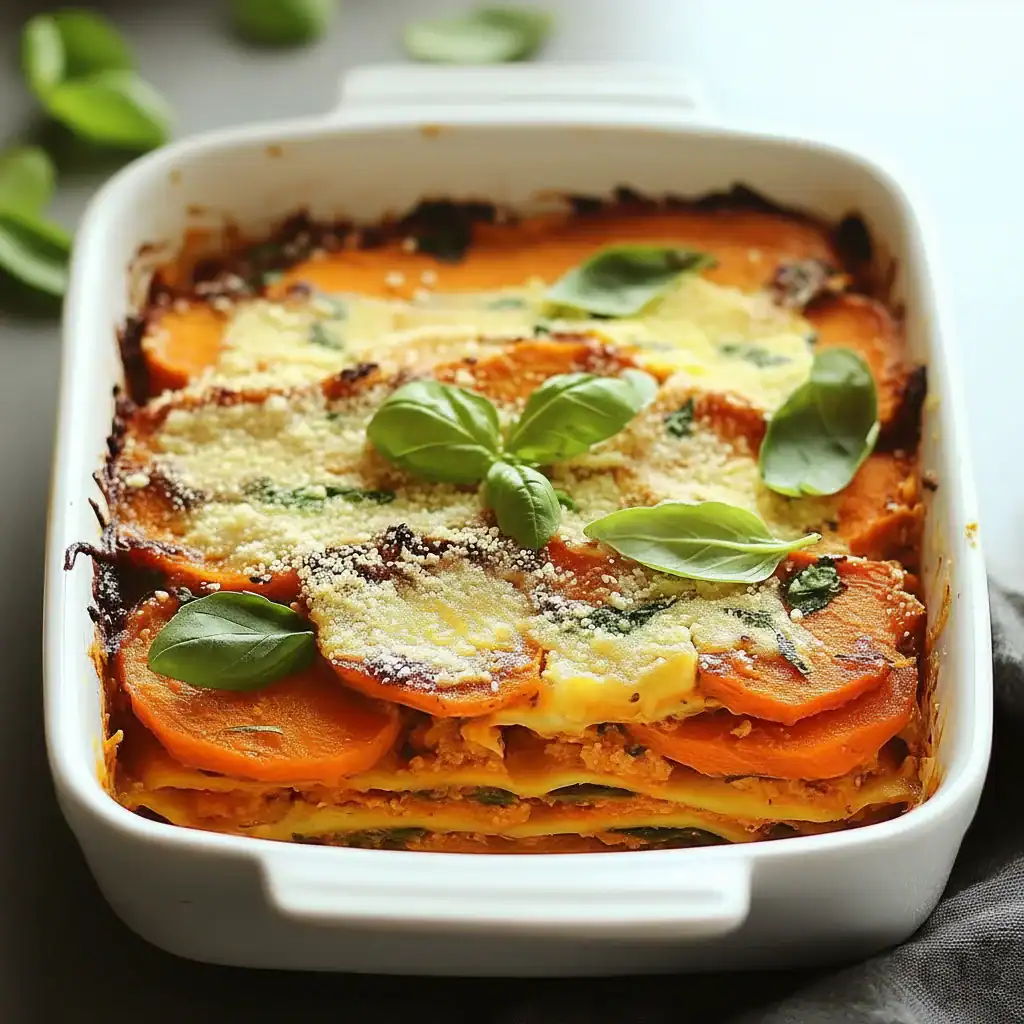
- Assemble the Lasagna: Reduce the oven temperature to 180°C (160°C fan). Remove the bay leaf from the ragu. Spread a thin layer of ragu on the bottom of a 20x30cm baking dish. Arrange a single layer of roasted sweet potato slices on top, overlapping them slightly. Follow with a third of the remaining ragu, then a third of the béchamel sauce. Repeat these layers twice more: sweet potato, ragu, béchamel.
- Bake to Perfection: Finish with the remaining béchamel sauce. Sprinkle the grated mozzarella and the rest of the Parmesan cheese evenly over the top. Place the dish on a baking tray to catch any drips and bake for 40-45 minutes, until the top is golden brown and the sauce is bubbling around the edges.
- Rest Before Serving: This is a key step! Let the lasagna rest for at least 10 minutes before slicing and serving. This allows the layers to set, making it much easier to cut into neat portions.
Notes
Letting the lasagna rest for at least 10 minutes before slicing is crucial for clean, well-defined portions.