Warm Tofu Soup Recipe for a Nourishing Meal
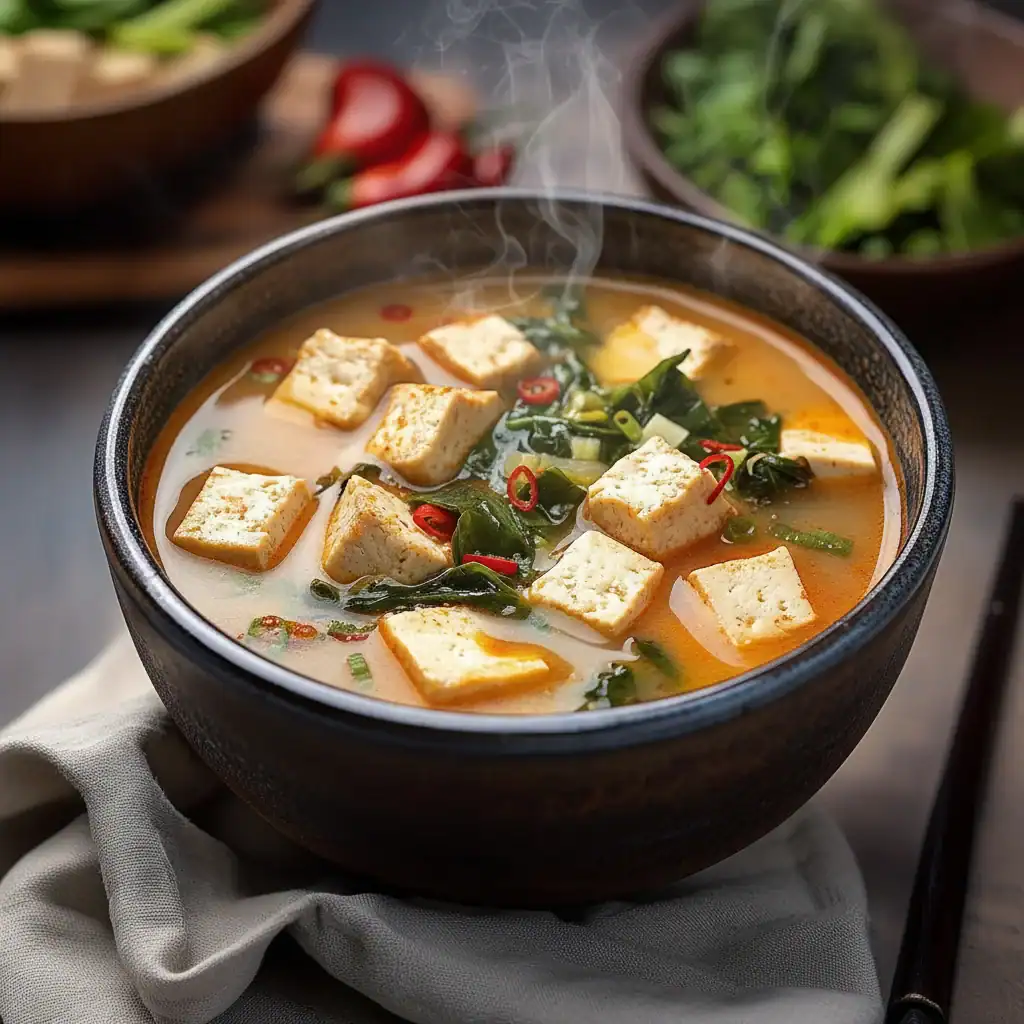
There are some meals that feel like a warm hug in a bowl, and this tofu soup recipe is exactly that. It’s the dish I turn to on a drizzly Tuesday evening, when the day has been long and I need something that is both restorative and deeply satisfying without a lot of fuss. This particular recipe was inspired by a tiny, unassuming restaurant I stumbled upon in London’s New Malden, where a bowl of steaming, spicy soup managed to brighten up the greyest of days. I’ve spent months perfecting my own version at home, and I think I’ve finally cracked it.
What makes this soup so special is the harmony between its components. We have the incredibly soft, silken tofu that practically melts in your mouth, swimming in a vibrant, savoury broth that has a gentle, warming heat. It’s not about overwhelming spice; it’s about a deep, resonant flavour built from a few key ingredients like gochujang and miso. The fresh crunch of spring onions and the earthy notes of mushrooms add layers of texture that make every spoonful interesting.
This soup recipe works beautifully for a solo weeknight dinner, but it’s also fantastic for sharing. It’s a wonderfully nourishing option when you’re feeling a little under the weather, or simply when you want a light yet substantial meal. It comes together in about 30 minutes, proving that you don’t need hours in the kitchen to create something genuinely delicious.
Recipe Overview
This tofu soup recipe delivers a rich, savoury broth with a gentle spicy kick, balanced by the delicate creaminess of silken tofu. Expect a dish that feels both comforting and invigorating. During my testing, I found that using a combination of both gochujang (Korean chilli paste) and doenjang (Korean soybean paste) gives the broth an incredible depth that you just can’t get from one alone.
- Prep Time: 10 minutes
- Cook Time: 20 minutes
- Total Time: 30 minutes
- Servings: 4 people
- Difficulty: Easy
Why You’ll Love This Tofu Soup Recipe
- Genuine Flavour: The broth is the star here. It’s a deeply savoury and complex base, thanks to the umami-rich combination of miso, gochujang, and soy sauce, all lifted by the aromatic trio of garlic, ginger, and spring onion.
- Ready in Under 30 Minutes: This is a wonderfully efficient recipe. From chopping the vegetables to ladling the finished soup into bowls, the whole process is straightforward and takes around half an hour.
- Flexible Recipe: You can easily adapt this soup. If you don’t have shiitake mushrooms, chestnut mushrooms work well. Add a handful of fresh spinach at the end for extra greens, or swap the silken tofu for firm tofu if you prefer a chewier texture.
- Great for a Nourishing Meal: It’s ideal when you want something that feels both light and deeply satisfying. It’s my go-to for a cosy night in or a restorative lunch. For another comforting meal idea, you might also like this Low Carb Chicken Casserole.
- Family Tested: This recipe always gets compliments in my house. My husband, who’s usually picky about soup, asked for seconds the first time I made it!
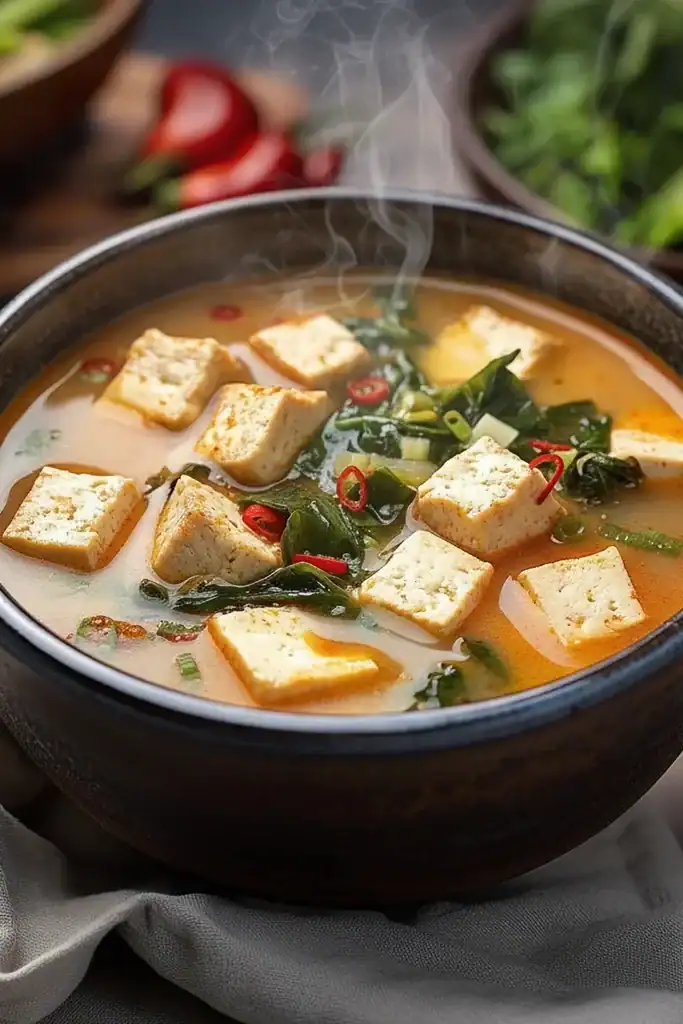
Ingredients You’ll Need
For the most authentic flavour, I recommend visiting an Asian supermarket for the gochujang and doenjang. I often use the O’Food brand for its reliable quality and balanced taste. The rest of the ingredients are easily found at your local supermarket.
- 1 tbsp sesame oil
- 3 cloves garlic, finely minced
- 1 inch ginger, peeled and finely grated
- 4 spring onions, white and green parts separated and sliced
- 100g shiitake mushrooms, sliced
- 1-2 tbsp gochujang (Korean chilli paste), adjust to your spice preference
- 1 tbsp doenjang (Korean fermented soybean paste) or white miso paste
- 1 litre vegetable or chicken stock
- 1 tbsp light soy sauce
- 1 tsp sugar (optional, to balance the flavours)
- 400g block of silken tofu
- 1 large free-range egg (optional)
- To garnish: toasted sesame seeds, extra sliced spring onion greens
Sara’s Tip: Be gentle when handling the silken tofu. Don’t press it. Simply drain the water from the package and it’s ready to use. Its delicate texture is what makes this soup so wonderful, so you want to keep it as intact as possible.
How to Make This Tofu Soup Recipe
The process for this soup is all about building layers of flavour in the pot, starting with the aromatics and finishing with the delicate tofu. It’s a straightforward method that yields brilliant results every time.
- Sauté the Aromatics: Heat the sesame oil in a large stockpot or Dutch oven over a medium heat. Add the minced garlic, grated ginger, and the sliced white parts of the spring onions. Cook for 1-2 minutes, stirring constantly, until they become fragrant but don’t take on any colour.
- Cook the Mushrooms: Add the sliced shiitake mushrooms to the pot. Continue to cook for another 4-5 minutes until the mushrooms have softened and released some of their moisture, which will add a lovely earthy depth to the soup.
- Bloom the Pastes: Add the gochujang and doenjang (or miso) to the pot. Stir everything together and cook for one minute. This step is crucial as it toasts the pastes slightly, deepening their flavour. I find this makes a huge difference to the final broth.
- Create the Broth: Pour in the vegetable or chicken stock, stirring well to ensure the pastes dissolve completely. Add the soy sauce and the optional sugar. Bring the mixture to a lively simmer.
- Simmer Gently: Once simmering, reduce the heat to low, cover the pot, and let the broth bubble away gently for 10 minutes. This allows all those wonderful flavours to meld together.
- Add the Tofu: Carefully unpackage the silken tofu and drain any excess water. Using a large spoon, gently scoop large pieces of the tofu and add them directly into the simmering broth. Try not to break it up too much.
- Final Touches: Let the tofu heat through for 2-3 minutes. If you’re using an egg, make a small well in the centre of the soup and crack the egg directly into it. Let it poach in the hot broth for 2-3 minutes, or until the white is set but the yolk is still runny.
- Serve Immediately: Carefully ladle the hot soup into bowls, making sure to get generous chunks of tofu in each serving. Garnish with the reserved green parts of the spring onions and a sprinkle of toasted sesame seeds.
Tips From My Kitchen
- Temperature Control: Once you’ve added the doenjang/miso and the tofu, avoid boiling the soup vigorously. A very gentle simmer is all you need. High heat can diminish the delicate flavours of the fermented paste and can cause the silken tofu to break apart completely.
- The Secret Step: I learned that the technique of ‘blooming’ the chilli paste in oil before adding liquid makes a world of difference. As explained by food science experts at Serious Eats, this process helps to unlock fat-soluble flavour compounds, resulting in a much richer and more aromatic broth.
- Make-Ahead: You can prepare the soup base (up to step 5) a day in advance and store it in the fridge. When you’re ready to eat, simply bring it back to a simmer and proceed with adding the tofu and egg. The aromatics can also be chopped and stored in an airtight container in the fridge for up to 2 days.
- Storage: Leftover soup can be stored in an airtight container in the refrigerator for up to 3 days. Reheat it gently on the hob over a low heat. I find the texture of the silken tofu holds up reasonably well, but it’s always best when fresh.
Equipment You’ll Need
- Large stockpot or Dutch oven
- Ladle
- Sharp knife and cutting board
- Grater or microplane for the ginger
Delicious Variations to Try
This tofu soup recipe is a brilliant canvas for customisation. Once you have the base broth right, you can play around with different additions to make it your own.
- Spicy Version: For those who like more heat, increase the gochujang to 3 tablespoons or add a teaspoon of gochugaru (Korean chilli flakes) along with the pastes for a cleaner, sharper spice.
- Vegan Option: This recipe is easily made vegan. Simply ensure you are using vegetable stock and omit the optional egg at the end. It’s just as delicious.
- Different Protein: If you’re not set on a vegetarian meal, you can add other proteins. A handful of raw prawns thrown in for the last 3-4 minutes of cooking works wonderfully. You could also brown some minced pork with the aromatics at the start. For a chicken alternative, check out this simple Lemon Garlic Chicken recipe.
What to Serve With This Tofu Soup Recipe
While this soup is a satisfying meal on its own, a few simple accompaniments can elevate it further.
- Steamed Jasmine Rice: A small bowl of fluffy white rice is the traditional and, in my opinion, best accompaniment. It’s perfect for soaking up every last drop of that flavourful broth.
- Kimchi: The fermented, tangy crunch of kimchi provides a brilliant contrast to the soft, warm soup. A small side dish is all you need.
- A Simple Green Salad: A salad with a sesame-ginger dressing can add a fresh, crisp element to the meal, balancing the richness of the soup. Thinking of other healthy meal ideas? This list of healthy chicken recipes has some great inspiration.
Frequently Asked Questions
Tofu Soup Recipe
Ingredients
Method
- Sauté the Aromatics: Heat the sesame oil in a large stockpot or Dutch oven over a medium heat. Add the minced garlic, grated ginger, and the sliced white parts of the spring onions. Cook for 1-2 minutes, stirring constantly, until they become fragrant but don't take on any colour.
- Cook the Mushrooms: Add the sliced shiitake mushrooms to the pot. Continue to cook for another 4-5 minutes until the mushrooms have softened and released some of their moisture, which will add a lovely earthy depth to the soup.
- Bloom the Pastes: Add the gochujang and doenjang (or miso) to the pot. Stir everything together and cook for one minute. This step is crucial as it toasts the pastes slightly, deepening their flavour. I find this makes a huge difference to the final broth.
- Create the Broth: Pour in the vegetable or chicken stock, stirring well to ensure the pastes dissolve completely. Add the soy sauce and the optional sugar. Bring the mixture to a lively simmer.
- Simmer Gently: Once simmering, reduce the heat to low, cover the pot, and let the broth bubble away gently for 10 minutes. This allows all those wonderful flavours to meld together.
- Add the Tofu: Carefully unpackage the silken tofu and drain any excess water. Using a large spoon, gently scoop large pieces of the tofu and add them directly into the simmering broth. Try not to break it up too much.
- Final Touches: Let the tofu heat through for 2-3 minutes. If you're using an egg, make a small well in the centre of the soup and crack the egg directly into it. Let it poach in the hot broth for 2-3 minutes, or until the white is set but the yolk is still runny.
- Serve Immediately: Carefully ladle the hot soup into bowls, making sure to get generous chunks of tofu in each serving. Garnish with the reserved green parts of the spring onions and a sprinkle of toasted sesame seeds.
Notes
I really hope you enjoy making this comforting tofu soup recipe. It has become a true staple in our home for its sheer deliciousness and nourishing qualities. Let me know how you get on in the comments below – I love hearing about your kitchen adventures!
Happy cooking,
Sara