Ultimate Smoked Beef Brisket Recipe

The Ultimate Smoked Beef Brisket Recipe: A Step-by-Step Guide
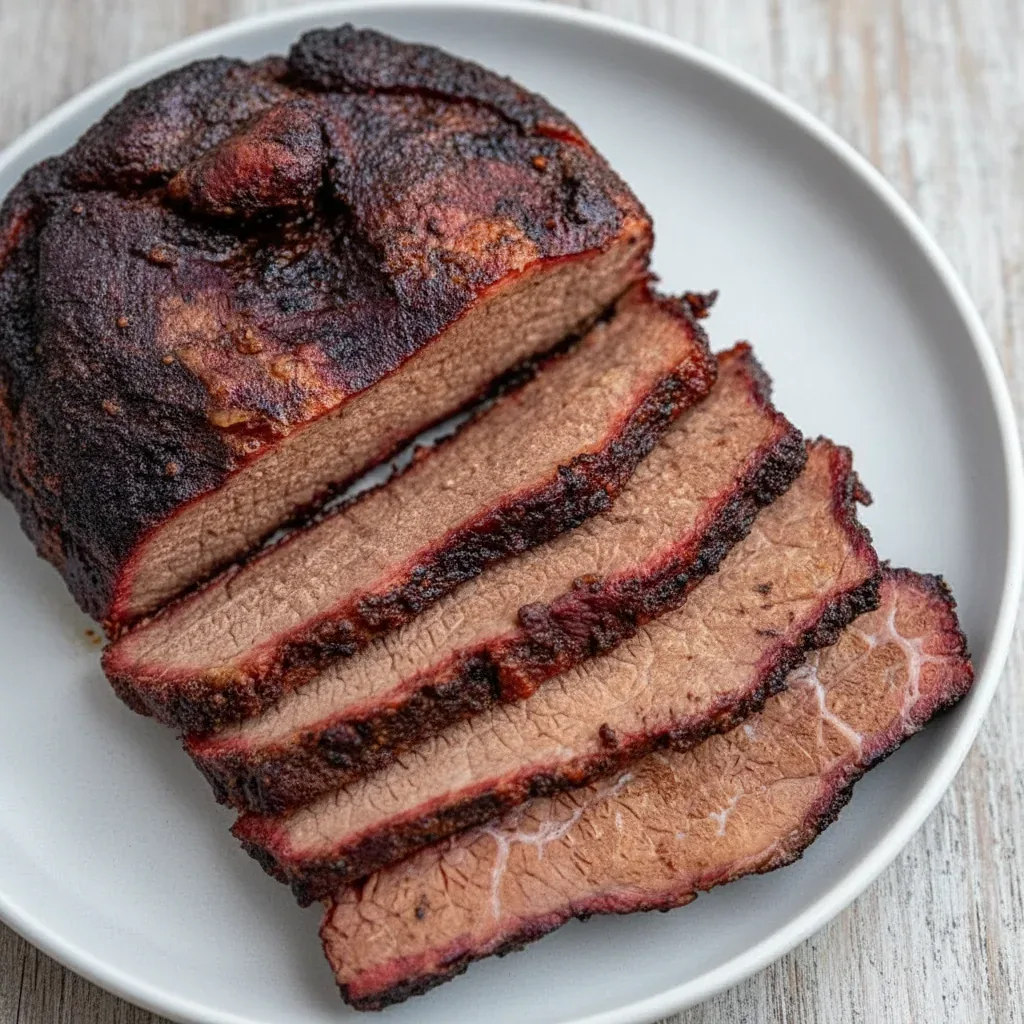
Have you ever pictured yourself presenting a piece of beef so perfectly cooked that it falls apart at the touch? A cut boasting a profound smoky taste, a gorgeous dark bark, and a moist interior that leaves everyone in awe? For many barbecue enthusiasts, mastering beef brisket is the ultimate goal. While it might appear intimidating, we’re here to show you that it’s well within your reach. We will guide you through every stage, from selecting the right cut to making that final, satisfying slice. This is our Ultimate Smoked Beef Brisket Recipe, crafted to ensure you get flawless results and become the hero of your next barbecue.
Why You’ll Love This Recipe
- Incredibly Succulent and Tender: We employ a precise low and slow cooking technique that effectively dissolves the tough connective tissues, yielding an exceptionally tender smoked meat that’s easily cut with a fork.
- Deep, Smoky Perfection: The marriage of our straightforward yet powerful brisket rub and the extended smoking time builds a rich, savoury, and smoky flavour profile with that classic, irresistible crust known as the “bark”.
- A True Centrepiece Meal: Nothing makes a statement quite like a whole smoked brisket served at the dinner table. It’s the ideal main course for family get-togethers, celebrations, or any weekend you wish to make memorable.
- Clear, Beginner-Friendly Method: We’ve simplified the entire procedure into manageable, easy-to-follow instructions. We remove the uncertainty from smoking brisket, making it accessible for novices and seasoned pitmasters alike.
Ingredients
- 1 whole ‘packer’ beef brisket, approximately 5-7 kg (11-15 lbs), untrimmed
- 120g coarse sea salt
- 120g coarse black pepper (16-mesh is ideal if you can find it)
- 60g smoked paprika
- 30g garlic powder
- 30g onion powder
- 2 tablespoons brown sugar (optional, for enhanced crust)
- Yellow mustard, to act as a binder
- 500ml apple cider vinegar, for the spritz
- 500ml water, for the spritz
Choosing and Prepping Your Brisket
The path to an outstanding BBQ beef brisket starts at your local butcher. We suggest you request a ‘packer’ cut. This comprises both the leaner ‘flat’ muscle and the more marbled ‘point’ muscle, which are joined by a substantial layer of fat. This fat is the source of incredible flavour and is vital for keeping the brisket moist throughout the lengthy cooking process.
Trimming the Fat Cap
Your brisket will arrive with a considerable layer of fat on one side, which is known as the fat cap. We don’t want to get rid of it completely, but trimming is essential. A fat cap that is too thick will prevent the smoke and seasoning from properly penetrating the meat.
- With a sharp boning knife, carefully trim the fat cap down so it has a consistent thickness of around 6mm (¼ inch).
- Carve away any large, hard sections of fat, as these will not render down during the cook.
- Feel free to shape the brisket a little, trimming away any thin or loose pieces that could burn. For an excellent visual overview of the brisket’s anatomy, we recommend this detailed brisket guide.
The Perfect Brisket Rub Recipe
While some pitmasters keep their rub recipes a closely guarded secret, the key to a phenomenal Texas-style brisket often lies in simplicity. Our goal is to complement the natural flavour of the beef, not overpower it. Our brisket rub recipe is a time-tested classic that produces brilliant results every time.
How to Apply the Rub
- Thoroughly pat the brisket dry using paper towels.
- Lightly coat the entire surface of the meat with a thin sheen of yellow mustard. Rest assured, its flavour won’t be noticeable in the finished dish! The mustard serves as a binder, helping the rub adhere to the brisket.
- In a separate bowl, combine the salt, pepper, smoked paprika, garlic powder, onion powder, and brown sugar (if you’re using it). Mix everything together well.
- Apply the rub mixture liberally and evenly over the whole brisket. Make sure to cover the top, bottom, and all sides. Don’t be shy!
- For the best outcome, place the seasoned brisket in the refrigerator, uncovered, overnight. This process allows the rub to act as a dry brine, which helps in forming an exceptional crust.
Mastering the Smoker for a Low and Slow Brisket
The secret to transforming this robust cut of beef into something truly special is to cook it at a steady, low temperature over a long period. We aim to maintain a smoker temperature between 120-135°C (250-275°F).
Choosing Your Wood
The type of wood you select will infuse the meat with a unique flavour. For beef brisket, we lean towards stronger woods that complement the rich taste of the meat. Excellent options include:
- Oak: A traditional choice that provides a balanced smoke flavour without being too intense.
- Hickory: Delivers a stronger, more bacon-like smoky taste.
- Mesquite: A very potent and earthy wood; use it sparingly or blend it with something milder.
The Smoking Process: A Step-by-Step Guide
Patience is the most crucial ingredient in this recipe. A brisket is done when it’s done, not based on a rigid schedule. The cooking time can vary from 8 to 14 hours, so it’s always wise to start much earlier than you anticipate needing to.
1. The Initial Smoke (First 4–6 Hours)
Position your brisket in the smoker with the fat-side facing up. This allows the melting fat to continuously baste the meat as it cooks. Insert a leave-in temperature probe into the thickest part of the flat to keep an eye on the internal temperature. At this point, close the lid and allow the smoke to do its work. For the initial few hours, fight the temptation to open the smoker! You need to let a solid crust, or ‘bark’, develop on the surface.
2. Spritzing and Monitoring the Bark
After approximately 3-4 hours, you can begin spritzing the brisket. Combine your apple cider vinegar and water in a food-safe spray bottle. Every 45 to 60 minutes, give any areas that look dry a light mist. This action helps keep the surface moist, attracts more smoke, and stops the bark from becoming overly tough.
3. Conquering the Stall (The Wrap)
At a certain point, typically when the brisket’s internal temperature is around 65-75°C (150-165°F), you will encounter “the stall.” This is a phase where the temperature plateaus and stops rising, sometimes for several hours. Do not worry! It’s a normal part of the process caused by evaporative cooling. To overcome it, we will wrap the brisket.
Once the bark has achieved a deep, mahogany hue and is firmly set, lay out two overlapping sheets of unwaxed butcher paper. Place the brisket on the paper and wrap it up as snugly as possible. We prefer butcher paper over foil because it is breathable, which helps to preserve the fantastic crust you’ve worked to create. Place the wrapped brisket back in the smoker.
4. Cooking to Tenderness (The Final Stage)
Keep cooking the brisket until it becomes “probe tender.” This is a feel test and is far more important than hitting a specific final temperature. Begin checking for this tenderness once the internal temperature reaches about 93°C (200°F). You can use your meat probe for this; it should glide into the thickest area of the flat with minimal resistance, similar to pushing it into a tub of butter. This can occur anywhere from 93-98°C (200-208°F).
Resting Your Brisket: The Most Important Step
As soon as your brisket is probe tender, remove it from the smoker. Do not be tempted to slice into it right away! This step is absolutely critical. Resting allows the muscle fibres to relax and reabsorb all of their flavourful juices. If you cut it too soon, all that moisture will spill out onto your chopping board.
Allow the wrapped brisket to rest in a warm, insulated spot, such as a cooler (with no ice) or a powered-off oven, for a minimum of one hour, though 2-4 hours is even better. This extended rest period significantly improves the final texture and juiciness.
How to Slice and Serve
Slicing the brisket correctly is the final part of the process. It’s important to remember that the flat and the point muscles have grains that run in different directions.
- Unwrap your well-rested brisket and place it on a large chopping board.
- Begin by slicing the flat section against the grain into slices about the thickness of a pencil.
- Once you get to the area where the two muscles overlap, pause and turn the point 90 degrees.
- Resume slicing the point, once again ensuring you cut against the grain.
Serve it straight away and enjoy the reaction from your guests. While the brisket is undoubtedly the main attraction, it goes wonderfully with classic BBQ accompaniments. For other occasions where you need a dish that’s sure to impress, our Garlic Parmesan Chicken Pasta Recipe is always a winner.
FAQ
Your Journey to Brisket Perfection
And there you have it—our comprehensive guide to smoking a truly memorable beef brisket. This process is undoubtedly a labour of love, but the payoff is one of the most delicious and rewarding culinary achievements you can experience. It all comes down to patience, proper technique, and trusting the process. We are certain that by following our steps, you will create a stunning result that makes every moment of effort worthwhile.
If you’re after another recipe that delivers a huge burst of flavour but is ready much more quickly, we believe you’ll adore our Sticky Chicken Rice Bowls for a fantastic weeknight dinner. For now, go and light up that smoker, give this ultimate smoked beef brisket recipe a go, and please let us know how it turns out in the comments section below. We look forward to hearing about your success!
Recipe Card
Ingredients
- 1 whole ‘packer’ beef brisket (5-7 kg / 11-15 lbs), untrimmed
- 120g coarse sea salt
- 120g coarse black pepper
- 60g smoked paprika
- 30g garlic powder
- 30g onion powder
- 2 tablespoons brown sugar (optional)
- Yellow mustard (to use as a binder)
- 500ml apple cider vinegar (for spritz)
- 500ml water (for spritz)
Instructions
- Prep: Trim the brisket’s fat cap to a uniform 6mm (¼ inch) thickness. Pat the brisket dry with paper towels.
- Season: Apply a thin layer of yellow mustard as a binder. In a bowl, combine salt, pepper, smoked paprika, garlic powder, onion powder, and optional brown sugar. Apply the rub liberally over the entire brisket. For best results, rest uncovered in the fridge overnight.
- Smoke: Preheat your smoker to 120-135°C (250-275°F). Place the brisket fat-side up and smoke for 4-6 hours until a dark bark forms.
- Spritz: After about 3-4 hours, begin spritzing any dry-looking areas with a 1:1 mixture of apple cider vinegar and water every 45-60 minutes.
- Wrap: When the internal temperature stalls (around 65-75°C / 150-165°F) and the bark is a deep mahogany color, wrap the brisket tightly in unwaxed butcher paper.
- Finish: Return the wrapped brisket to the smoker and cook until ‘probe tender’ (around 93-98°C / 200-208°F), when a probe slides into the thickest part with no resistance.
- Rest: Remove the brisket from the smoker and rest it, still wrapped, in a warm place (like a cooler with no ice) for at least 1-2 hours, but preferably 2-4 hours. Do not skip this step.
- Slice: Unwrap the brisket and slice against the grain. Start with the ‘flat’, then rotate the ‘point’ 90 degrees and continue slicing against its grain. Serve immediately.