Tropical Mango Sticky Rice Recipe
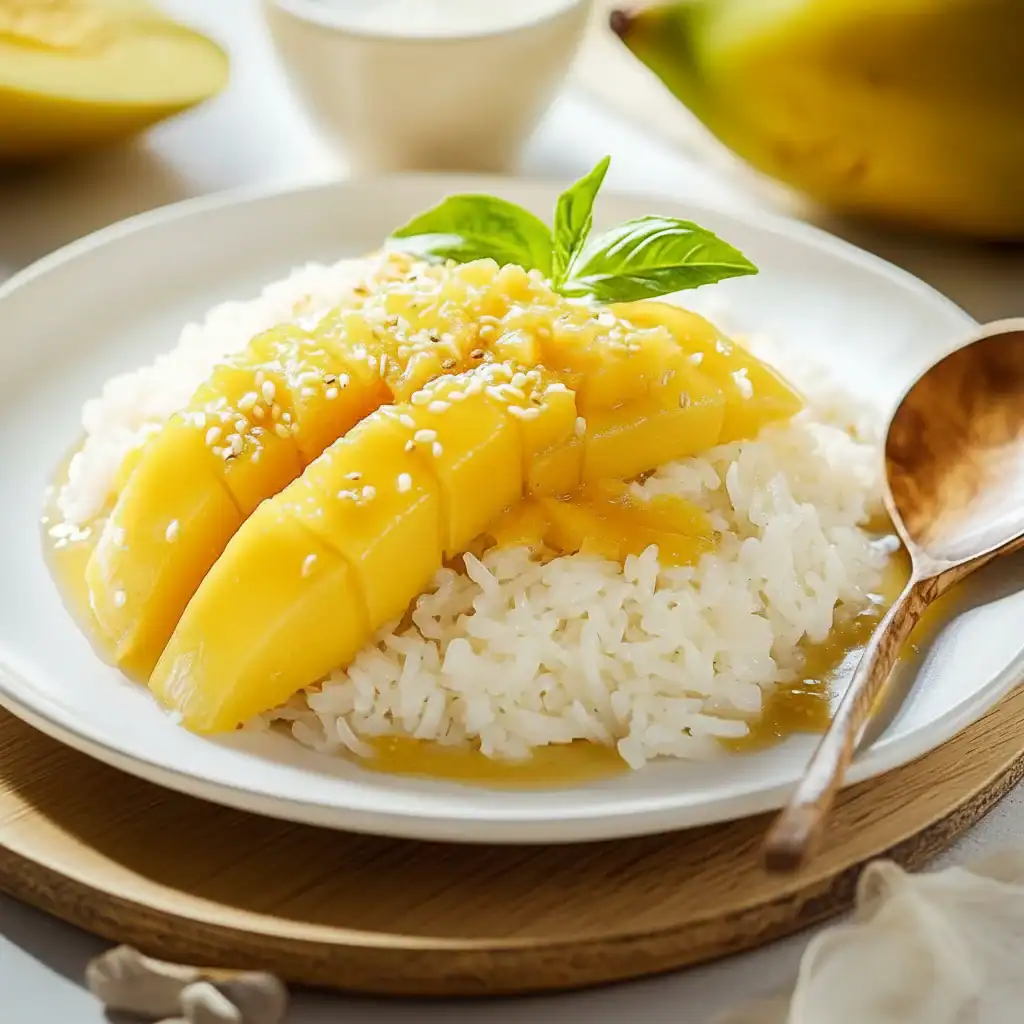
There are some desserts that transport you instantly, and for me, this Mango Sticky Rice recipe does just that. It takes me right back to a bustling street market in Chiang Mai, the air thick with the scent of charcoal grills, fragrant spices, and the sweet, intoxicating aroma of ripe mango and coconut. This isn’t just a dessert; it’s a texture and flavour experience. You get the soft, slightly chewy glutinous rice, saturated with a rich, sweet coconut sauce, paired with the bright, luscious sweetness of a perfectly ripe mango. A final drizzle of a salty-creamy coconut topping cuts through the sweetness, creating a perfectly balanced dish that is truly special.
I first attempted to recreate it at home after a holiday, determined to capture that authentic taste. It took a few tries to get the rice texture just right, but the result is a recipe I now make throughout the mango season. It’s the kind of dessert that feels both indulgent and wonderfully refreshing at the same time. I make this at least once a month when mangoes are at their peak – it’s become a family favourite. It’s ideal for finishing off a Southeast Asian-inspired meal or just as a standalone treat on a warm afternoon.
This authentic Mango Sticky Rice recipe will guide you through getting every element spot on, from steaming the rice to making the two distinct coconut sauces. Don’t be intimidated by the steps; they are straightforward and the result is more than worth the effort. Let’s get cooking!
Recipe Overview
This Mango Sticky Rice recipe creates a classic Thai dessert with three core components: perfectly steamed glutinous rice, a sweet coconut sauce to infuse the rice, and a slightly salty coconut cream topping to drizzle over. The flavour is a delightful balance of creamy, sweet, and subtly salty, with the fresh, juicy mango providing a bright contrast. After some testing, I found that letting the rice rest and absorb the coconut milk for at least 15 minutes is the key to getting that signature soft, chewy texture.
- Prep Time: 15 minutes (plus 4 hours soaking time)
- Cook Time: 30 minutes
- Total Time: 45 minutes (plus soaking)
- Servings: 4 people
- Difficulty: Medium
Why You’ll Love This Mango Sticky Rice Recipe
- Genuine Flavour: We’re not cutting corners here. You get the authentic taste of Thailand with the creamy, full-fat coconut milk creating a luscious sauce, balanced perfectly by a pinch of salt and the natural sweetness of palm sugar.
- Active Cooking in 30 Minutes: While the rice needs a good soak, the hands-on cooking part comes together in about 30 minutes, making it an achievable treat for a special evening.
- Flexible Recipe: You can easily adjust the sweetness of the sauce to your liking. If you can’t find palm sugar, caster sugar works well. You can also toast some sesame seeds or yellow mung beans for a crunchy topping.
- Great for a Dinner Party Finale: This dessert works beautifully after a spicy main course, like my Sweet Chili Chicken Recipe. Its creamy, cooling nature is a wonderful contrast to heat and spice.
- Family Tested: This recipe always gets compliments. My husband, who’s usually picky about desserts, asked for seconds the first time I made it!
Ingredients You’ll Need
For the most authentic flavour, it’s worth seeking out a few specific ingredients. Thai glutinous rice (also called sweet rice) is non-negotiable; it has a unique starch composition that makes it sticky and chewy when steamed. For the coconut milk, I always recommend using a full-fat version from a tin, as the carton varieties are often too thin. Aroy-D or Chaokoh are two excellent brands that deliver consistent creaminess.
- For the Sticky Rice:
- 400g Thai glutinous rice (sweet rice)
- 250ml full-fat coconut milk
- 150g caster sugar (or palm sugar, finely chopped)
- 1/2 tsp salt
- For the Coconut Topping:
- 125ml full-fat coconut milk
- 1 tbsp caster sugar
- 1/4 tsp salt
- 1 tsp cornflour mixed with 1 tbsp water
- For Serving:
- 2-3 large ripe mangoes (Ataulfo or Honey mangoes are ideal)
- 1 tbsp toasted white sesame seeds (optional)
Sara’s Tip: Make sure your mangoes are perfectly ripe. They should give slightly when pressed gently and have a strong, sweet fragrance. A less-than-perfect mango can really affect the final dish.
How to Make Mango Sticky Rice
The process involves three main stages: preparing the rice, making the sauces, and assembling. The key is to have everything ready to go so you can mix the hot, steamed rice with the sweet coconut sauce as soon as it’s cooked.
- Rinse and Soak the Rice: Place the glutinous rice in a large bowl. Cover with plenty of cold water and use your hands to swish the grains around. The water will become cloudy. Drain and repeat this rinsing process 4-5 times, until the water runs mostly clear. Cover the rinsed rice with fresh cold water and leave to soak for at least 4 hours, or overnight.
- Steam the Rice: Drain the soaked rice thoroughly. Line a steamer basket with muslin cloth or a clean tea towel. Tip the rice into the basket and spread it out evenly. Place the steamer over a wok or pot of simmering water (make sure the water doesn’t touch the bottom of the steamer). Cover and steam for 20-25 minutes, or until the rice is tender, translucent, and cooked through.
- Prepare the Sweet Coconut Sauce: While the rice is steaming, gently heat 250ml of coconut milk, 150g of sugar, and 1/2 tsp of salt in a small saucepan over a low-medium heat. Stir continuously until the sugar and salt have completely dissolved. Do not let the mixture boil, as the coconut milk can split. Once dissolved, remove from the heat.
- Combine Rice and Sauce: Once the rice is cooked, transfer the hot rice to a large heatproof bowl. Pour the warm, sweet coconut sauce all over the rice. Gently fold the sauce through the rice with a spatula until it’s well combined. Cover the bowl and let it stand for at least 15-20 minutes. This is a crucial step where the rice absorbs the sauce, becoming creamy and flavourful. What works best for me is giving it a gentle stir halfway through the resting period.
- Make the Topping Sauce: In the same small saucepan, combine the 125ml of coconut milk, 1 tbsp of sugar, and 1/4 tsp of salt. Heat gently until the sugar dissolves. Add the cornflour slurry (1 tsp cornflour mixed with 1 tbsp water) and stir for 1-2 minutes until the sauce thickens slightly. It should be the consistency of single cream. Remove from the heat and set aside.
- Prepare the Mango: Peel the mangoes. Slice the cheeks off from either side of the flat stone. You can then slice the cheeks into neat pieces or dice them.
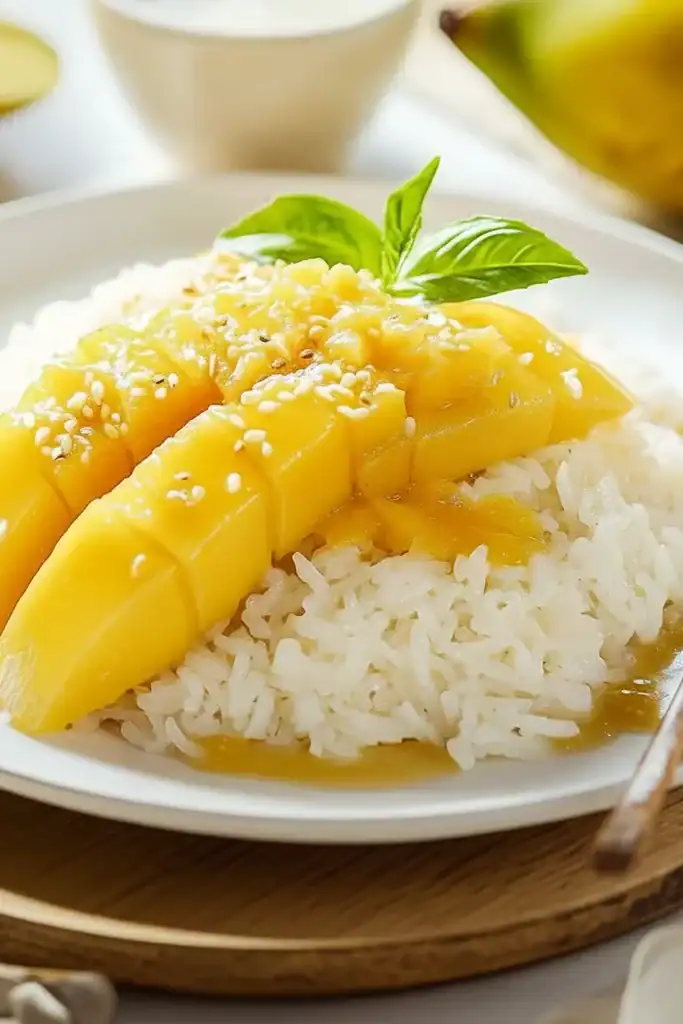
- Serve: To serve, place a generous portion of the sticky rice onto a plate. Arrange the fresh mango slices alongside it. Drizzle the salty coconut topping sauce over the rice and sprinkle with toasted sesame seeds, if using. Serve immediately while the rice is still warm.
Tips From My Kitchen
- Temperature Control: When heating both coconut milk sauces, use a low, gentle heat. If coconut milk boils, its fats and proteins can separate, resulting in a grainy or split sauce. Constant, gentle stirring is your best friend here.
- The Secret Step: Don’t rush the resting phase after you’ve mixed the rice with the sweet sauce. I learned that this is where the texture transforms. The rice needs that time to absorb the liquid fully, becoming plump and creamy rather than just wet.
- Make-Ahead: You can make the sauces up to 2 days in advance and store them in the fridge. The rice is best steamed fresh, but you could steam it a few hours ahead and keep it covered. Gently reheat the rice in the steamer for 5 minutes before mixing with the gently warmed sauce.
- Storage: Mango Sticky Rice is best enjoyed on the day it’s made. If you have leftovers, store the rice and mango separately in airtight containers in the fridge for up to 1 day. The rice will harden when chilled. To reheat, sprinkle with a little water and microwave in 30-second bursts until soft.
Equipment You’ll Need
- Large bowl (for soaking rice)
- Steamer basket and a large pot or wok
- Muslin cloth or clean tea towel
- Small saucepan
- Spatula or wooden spoon
- Sharp knife and cutting board
Common Mistakes to Avoid
- Using the Wrong Rice: Do not substitute glutinous rice with jasmine, basmati, or sushi rice. They lack the high amylopectin starch content needed for that signature sticky, chewy texture. It must be labelled “glutinous rice” or “sweet rice”.
- Skipping the Soak: Soaking is a non-negotiable step. It allows the hard grains to hydrate, ensuring they steam evenly and become tender. If you skip it, the rice will be hard and cook unevenly.
- Boiling the Coconut Milk: As mentioned in the tips, boiling the coconut milk will cause it to separate and become oily. A gentle simmer is all that’s needed to dissolve the sugar and salt and create a smooth, creamy sauce.
What to Serve With Mango Sticky Rice
This dish is a star in its own right and doesn’t need much accompaniment. It’s traditionally served as a dessert or a sweet snack. Its history as a beloved Thai dish is well-documented, often enjoyed during the peak mango season in Thailand. You can learn more about its cultural significance on its Wikipedia page.
- Toasted Mung Beans: For a traditional crunchy element, sprinkle some crispy yellow mung beans over the top. You can find these in most Asian supermarkets.
- After a Savoury Meal: It’s a fantastic dessert after a flavourful main. If you enjoy rice-based meals, you might also like trying savoury dishes like these Sticky Chicken Rice Bowls on another night.
- Drink Pairing: A simple cup of hot jasmine or green tea works wonderfully to cleanse the palate between sweet, creamy bites.
Frequently Asked Questions
Mango Sticky Rice
Ingredients
Method
- Rinse and Soak the Rice: Place the glutinous rice in a large bowl. Cover with plenty of cold water and use your hands to swish the grains around. The water will become cloudy. Drain and repeat this rinsing process 4-5 times, until the water runs mostly clear. Cover the rinsed rice with fresh cold water and leave to soak for at least 4 hours, or overnight.
- Steam the Rice: Drain the soaked rice thoroughly. Line a steamer basket with muslin cloth or a clean tea towel. Tip the rice into the basket and spread it out evenly. Place the steamer over a wok or pot of simmering water (make sure the water doesn't touch the bottom of the steamer). Cover and steam for 20-25 minutes, or until the rice is tender, translucent, and cooked through.
- Prepare the Sweet Coconut Sauce: While the rice is steaming, gently heat 250ml of coconut milk, 150g of sugar, and 1/2 tsp of salt in a small saucepan over a low-medium heat. Stir continuously until the sugar and salt have completely dissolved. Do not let the mixture boil, as the coconut milk can split. Once dissolved, remove from the heat.
- Combine Rice and Sauce: Once the rice is cooked, transfer the hot rice to a large heatproof bowl. Pour the warm, sweet coconut sauce all over the rice. Gently fold the sauce through the rice with a spatula until it's well combined. Cover the bowl and let it stand for at least 15-20 minutes. This is a crucial step where the rice absorbs the sauce, becoming creamy and flavourful. What works best for me is giving it a gentle stir halfway through the resting period.
- Make the Topping Sauce: In the same small saucepan, combine the 125ml of coconut milk, 1 tbsp of sugar, and 1/4 tsp of salt. Heat gently until the sugar dissolves. Add the cornflour slurry (1 tsp cornflour mixed with 1 tbsp water) and stir for 1-2 minutes until the sauce thickens slightly. It should be the consistency of single cream. Remove from the heat and set aside.
- Prepare the Mango: Peel the mangoes. Slice the cheeks off from either side of the flat stone. You can then slice the cheeks into neat pieces or dice them.
- Serve: To serve, place a generous portion of the sticky rice onto a plate. Arrange the fresh mango slices alongside it. Drizzle the salty coconut topping sauce over the rice and sprinkle with toasted sesame seeds, if using. Serve immediately while the rice is still warm.
Notes
I really hope you give this Mango Sticky Rice recipe a try. It’s a wonderful way to bring the taste of a Thai holiday into your own kitchen. There’s something so satisfying about mastering a classic dish like this and seeing the happy faces of those you share it with. If you make it, please let me know how it turned out in the comments below. Happy cooking! – Sara