Simple Oil And Vinegar Salad Dressing Recipe
There’s a quiet satisfaction that comes from making your own salad dressing. For years, I relied on bottled dressings, assuming anything made from scratch would be complicated or time-consuming. But once I learned the basic formula for a classic oil and vinegar vinaigrette, I never looked back. It’s the kind of kitchen fundamental that transforms a simple bowl of leaves into something genuinely special. I make this at least once a week – it’s become a family favourite and the foundation for so many of our meals.
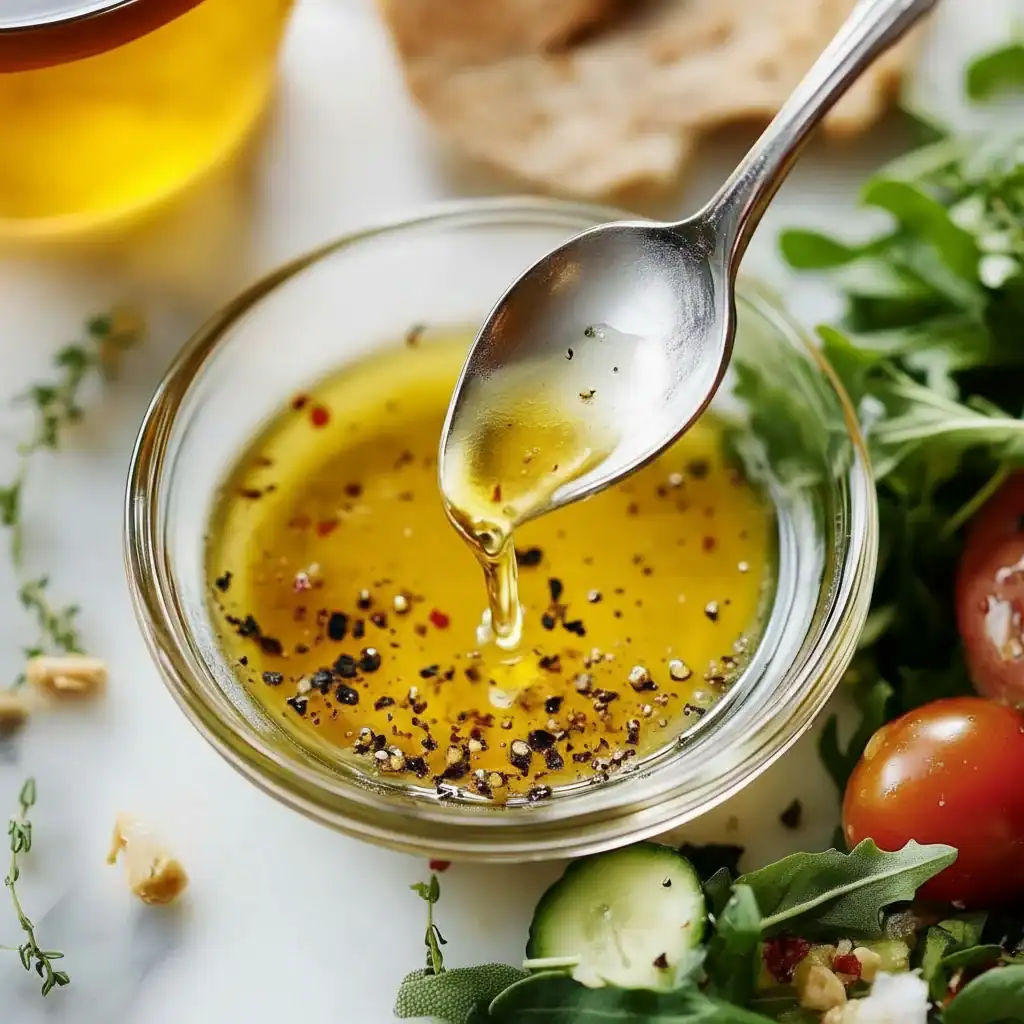
This particular Oil and Vinegar Salad Dressing Recipe is my go-to. It strikes a beautiful balance between the fruity richness of extra virgin olive oil and the sharp, bright tang of red wine vinegar, all brought together with a dollop of Dijon mustard that gives it a creamy texture and a subtle, savoury depth. It’s not just a dressing; it’s an upgrade. It clings to lettuce leaves instead of pooling at the bottom of the bowl, ensuring every single bite is perfectly seasoned.
This recipe is for anyone who appreciates real, honest flavour. It’s a game-changer for weekday lunches, turning a mundane desk salad into a little luxury. It also works wonderfully for weekend gatherings, dressing a large sharing salad to accompany a main course like our Bruschetta Chicken. It’s the simple, elegant touch that always gets compliments.
Recipe Overview
This recipe creates a classic, French-style vinaigrette that is both tangy and smooth. The flavour is bright and acidic from the vinegar, with a rich, peppery backbone from the olive oil. The Dijon mustard acts as an emulsifier, helping to bind the oil and vinegar into a creamy, stable dressing that won’t separate immediately. I’ve found that letting it sit for just five minutes after shaking allows the flavours to meld together beautifully.
- Prep Time: 5 minutes
- Cook Time: 0 minutes
- Total Time: 5 minutes
- Servings: Makes approx. 180ml (enough for 6-8 side salads)
- Difficulty: Easy
Why You’ll Love This Oil And Vinegar Salad Dressing Recipe
- Genuine Flavour: Unlike many shop-bought dressings that can taste overly sweet or artificial, this has a clean, vibrant taste. You get the authentic fruity notes of the olive oil and the distinct tang of real red wine vinegar.
- Ready in 5 Minutes: It honestly takes less time to shake this together in a jar than it does to find a bottle in a crowded supermarket aisle. It’s a straightforward process with a hugely rewarding result.
- Flexible Recipe: This recipe is a fantastic starting point. You can swap the red wine vinegar for apple cider or white wine vinegar. Add a crushed garlic clove for a punchy flavour, or a teaspoon of honey for a touch of sweetness.
- Great for Meal Prep: Make a double batch on a Sunday evening. It keeps brilliantly in the fridge and makes healthy eating throughout the week so much more appealing and achievable.
- Family Tested: This is the one dressing that everyone in my house agrees on. It’s simple enough for the kids to enjoy on a basic salad, but elegant enough to serve to guests.
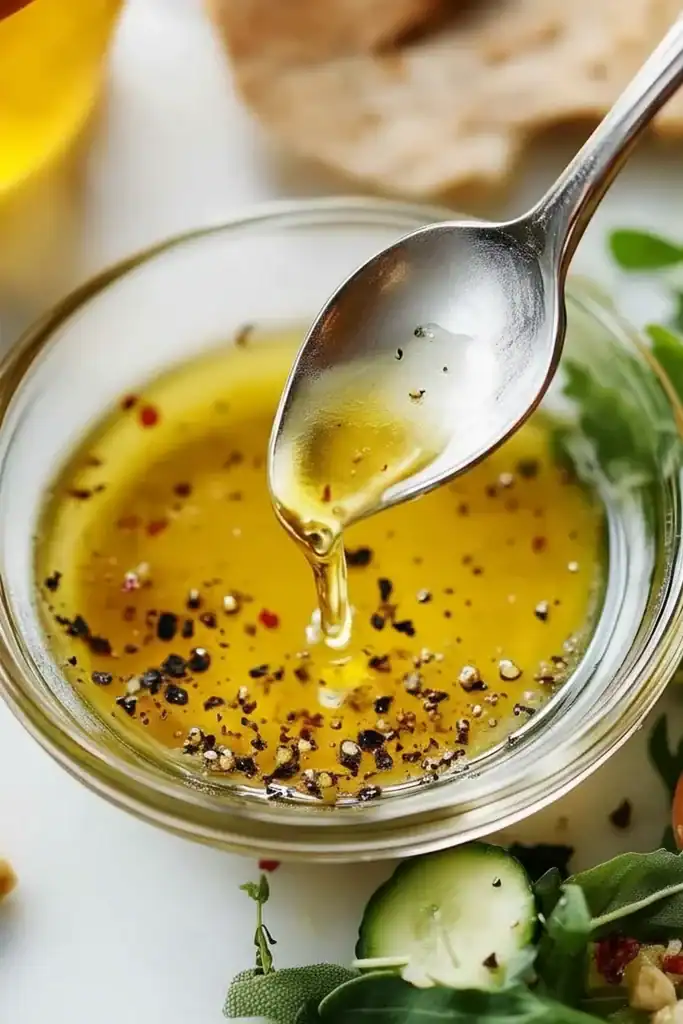
Ingredients You’ll Need
The beauty of this salad dressing recipe lies in its simplicity, which means the quality of each ingredient really shines through. I always use a good quality extra virgin olive oil, as its flavour is central to the dressing. A robust, slightly peppery one works best here.
- 120ml extra virgin olive oil
- 60ml red wine vinegar
- 1 ½ tsp Dijon mustard
- ½ tsp caster sugar (optional, but helps balance the acidity)
- ½ tsp fine sea salt
- ¼ tsp freshly ground black pepper
Sara’s Tip: Don’t use a pre-ground pepper. The flavour from freshly cracked peppercorns is significantly more aromatic and pungent, adding a lovely warmth that elevates the entire dressing.
How to Make This Oil And Vinegar Salad Dressing Recipe
The key to a great vinaigrette is creating a stable emulsion, which is just a fancy way of saying you need to get the oil and vinegar to mix together without separating straight away. The easiest method by far is using a jar, but a bowl and whisk work just as well.
- Combine the Base: Find a clean glass jar with a secure, tight-fitting lid. A jam jar works wonderfully. Add the red wine vinegar, Dijon mustard, sugar (if using), salt, and black pepper to the jar.
- Mix the Base: Screw the lid on tightly and give the jar a good shake for about 10 seconds. This helps the salt and sugar dissolve into the vinegar before you add the oil.
- Add the Oil: Pour the extra virgin olive oil into the jar with the vinegar mixture.
- Emulsify: Secure the lid tightly again. This is the important part! Shake the jar vigorously for about 30-45 seconds. You should see the mixture transform from two separate layers into a single, creamy, and slightly thickened dressing. What works best for me is to shake it until I can no longer see any distinct oil droplets.
- Taste and Adjust: Unscrew the lid and dip a piece of lettuce or your finger in to taste. It might need a little more salt or pepper. If it’s too sharp for your liking, add another tablespoon of olive oil and shake again. If it tastes a bit flat, a tiny splash more vinegar can brighten it up.
- Serve or Store: You can use the dressing immediately, or store it in the fridge. Just remember to give it another good shake right before serving.
Tips From My Kitchen
- The 3:1 Ratio is a Guideline: The classic vinaigrette ratio is three parts oil to one part vinegar. This is a brilliant starting point, but I often find my preference changes depending on the vinegar’s strength and what I’m serving it with. Don’t be afraid to adjust it to suit your own palate.
- The Secret Step: I learned that the mustard is the real hero here. It’s not just for flavour; it’s a natural emulsifier. The lecithin in mustard helps to hold the oil and vinegar molecules together, preventing the dressing from splitting too quickly.
- Make-Ahead Magic: This dressing is ideal for making in advance. I often make a double batch that lasts us well over a week. The flavours actually have time to meld and deepen a little after a day in the fridge.
- Storage Savvy: Store the dressing in an airtight jar in the refrigerator for up to 2 weeks. The olive oil will likely solidify when cold. This is completely normal! Just take it out of the fridge 20-30 minutes before you plan to use it to let it come to room temperature, then shake well to re-emulsify.
Equipment You’ll Need
You don’t need any fancy gadgets for this recipe, which is part of its charm. Here are the basics for making the dressing and serving a lovely salad with it.
- Small jar with a tight-fitting lid
- Large salad bowl
- Sharp knife and cutting board
- Salad servers
Common Mistakes to Avoid
While this recipe is straightforward, a few common pitfalls can make the difference between a good dressing and a great one.
- Getting the Ratio Wrong: Pouring equal amounts of oil and vinegar will result in a dressing that is overwhelmingly acidic. Start with the 3:1 oil-to-vinegar ratio and adjust from there. It’s much easier to add more vinegar than it is to balance out too much of it.
- Skipping the Emulsification: Just stirring the ingredients together with a spoon won’t work. You need vigorous shaking or whisking to break the oil into tiny droplets and suspend them in the vinegar. Without this step, you’ll have a layer of oil sitting on top that will make your salad greasy.
- Forgetting to Taste: Seasoning is personal. The amount of salt needed can vary based on your ingredients and your preference. Always taste the dressing on its own or with a leaf of lettuce before you pour it all over your beautiful salad.
What to Serve With This Oil And Vinegar Salad Dressing
This is a true all-purpose vinaigrette. It’s light enough for delicate leaves but punchy enough to stand up to more robust ingredients. Here are a few of my favourite ways to use it:
- Simple Green Salad: Toss with mixed greens, cucumber, cherry tomatoes, and thinly sliced red onion for a refreshing side to any meal, especially richer dishes like pasta or a hearty casserole. It’s fantastic with our Low Carb Chicken Casserole.
- Greek-Inspired Salad: Drizzle over a salad of tomatoes, cucumber, red onion, Kalamata olives, and feta cheese. The sharp dressing cuts through the saltiness of the feta and olives perfectly.
- As a Marinade: This dressing works wonderfully as a quick marinade for chicken or fish. Let the protein sit in the dressing for at least 30 minutes before grilling or pan-frying.
- Drink Pairing: A crisp, dry white wine like a Sauvignon Blanc or Pinot Grigio complements the acidity of the dressing beautifully.
Frequently Asked Questions
Oil And Vinegar Salad Dressing Recipe
Ingredients
Method
- Combine the Base: Find a clean glass jar with a secure, tight-fitting lid. A jam jar works wonderfully. Add the red wine vinegar, Dijon mustard, sugar (if using), salt, and black pepper to the jar.
- Mix the Base: Screw the lid on tightly and give the jar a good shake for about 10 seconds. This helps the salt and sugar dissolve into the vinegar before you add the oil.
- Add the Oil: Pour the extra virgin olive oil into the jar with the vinegar mixture.
- Emulsify: Secure the lid tightly again. This is the important part! Shake the jar vigorously for about 30-45 seconds. You should see the mixture transform from two separate layers into a single, creamy, and slightly thickened dressing. What works best for me is to shake it until I can no longer see any distinct oil droplets.
- Taste and Adjust: Unscrew the lid and dip a piece of lettuce or your finger in to taste. It might need a little more salt or pepper. If it's too sharp for your liking, add another tablespoon of olive oil and shake again. If it tastes a bit flat, a tiny splash more vinegar can brighten it up.
- Serve or Store: You can use the dressing immediately, or store it in the fridge. Just remember to give it another good shake right before serving.
Notes
Once you start making your own salad dressing, you’ll see how it can truly elevate the simplest of meals. I hope this classic oil and vinegar recipe becomes a trusted staple in your kitchen, just as it is in mine. Give it a try, and please let me know what you think in the comments below – I love hearing how you make these recipes your own!
All the best,
Sara